
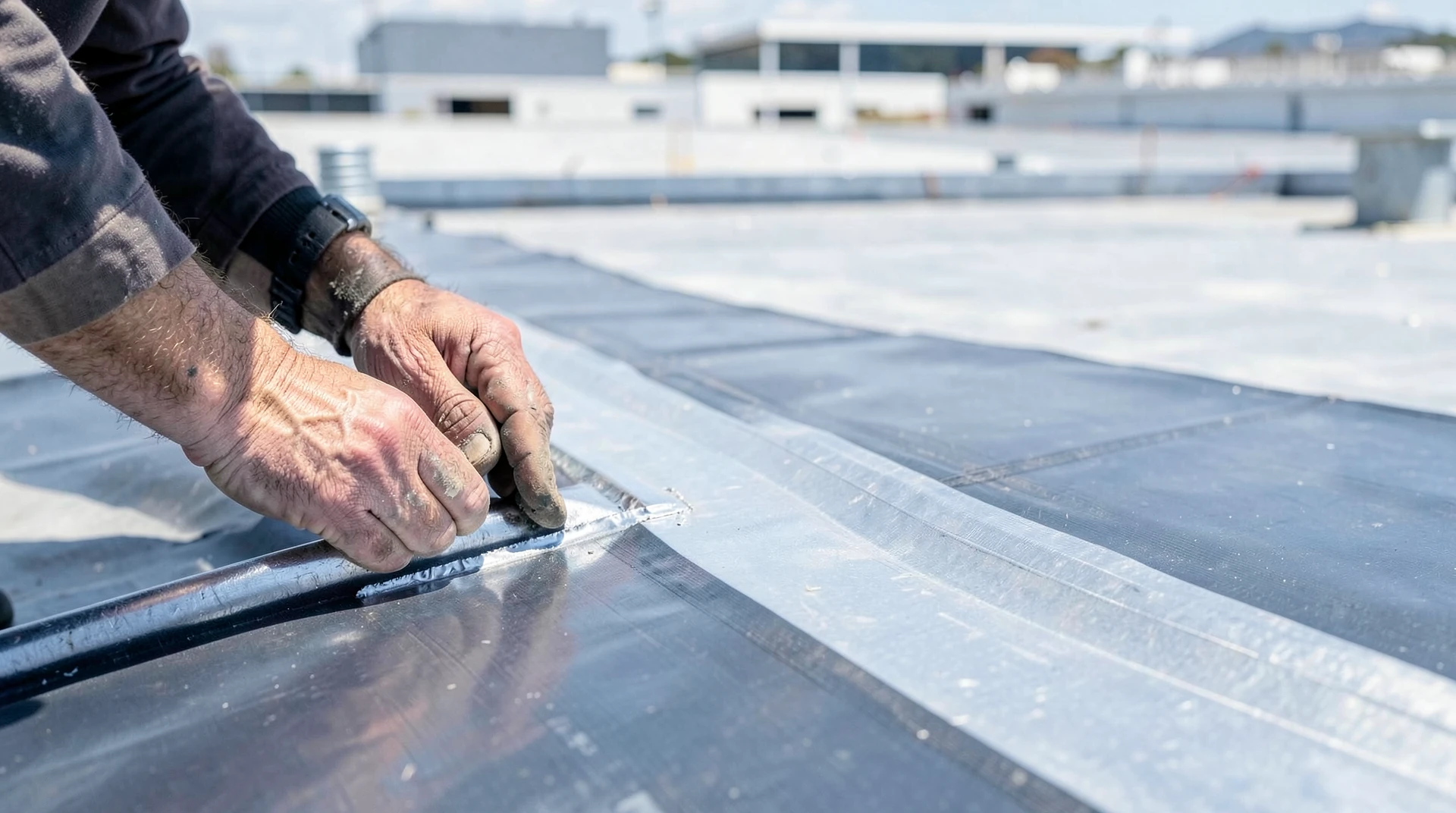
Advanced Flashing Techniques During Commercial Roof Replacement: Protecting Your Investment in South Oak Cliff
When you see water dripping from your ceiling or noticing visible streaks down an exterior wall, the immediate panic is understandable. It feels like a major problem that needs tackling now. But here’s what many homeowners and facility managers don't realize: the leak you are seeing-the drip, the stain, the damp patch-is often just the final act of a much longer, deeper play. The roof system itself failed long before the water finally found its way inside.
As someone who has spent 18 years navigating the unpredictable storm patterns and unique architectural challenges across South Oak Cliff, I've learned that roofing is rarely about the visible components like shingles or panels; it’s about what you can’t see: the connection points. These are the places where structures meet, where pipes penetrate, and where mechanical units sit on top of your membrane. Understanding how to execute advanced flashing techniques during commercial roof replacement isn't just a technical detail-it is the single most important factor in guaranteeing the longevity and structural integrity of your entire investment against Texas weather extremes.
More Than Just Shingles: Why Leaks Are Rarely Obvious Until It's Too Late
Think about it this way: if you scrape your knee, the leak is visible (the blood). But a deep cut or an internal infection is often doing far more damage than what you can see on the surface. Roofing failures are exactly like that. The obvious stain inside your building is merely the symptom-it’s the water escaping through the weakest point.
The most vulnerable sections of any large, flat commercial roof are almost never the main flat panels themselves. Instead, failure concentrates at the transitions. These transitions include:
- Vents and exhaust stacks.
- Chimneys and vertical wall interfaces (parapets).
- Mechanical units (HVAC) that penetrate through the roof plane.
These areas, where different materials or planes meet, create natural stress points. The intense hailstorms, sudden temperature shifts, and heavy rain events common right here in South Oak Cliff put tremendous strain on these joints. If the flashing around a vent isn't perfectly sealed, water doesn't just seep; it finds a path of least resistance and follows gravity until it hits your interior structure.
I’ve seen too many situations where a contractor simply attempts to patch the visible stain with temporary sealant. This is like treating a broken pipe by putting duct tape over the leak-it looks good for five minutes, but the underlying structural failure (the pipe itself) remains unaddressed and will inevitably burst again, usually worse than before. Addressing flashing failure requires rebuilding the system from scratch, not just applying a patch.
Understanding Flashing: The Roof's Invisible, Yet Critical, Belt
If the roof membrane (like TPO or Modified Bitumen) is the skin of your building, then the flashing is its waterproof belt-the critical gasket that wraps around every single penetration and transition point.
Simply put, flashing is a strip of durable, water-resistant metal material designed to redirect and seal water where two different materials meet (e.g., where a chimney meets the flat roof membrane). The difference between adequate flashing and advanced flashing is staggering. Basic, insufficient flashing might involve simple tape or minimal overlapping pieces that rely on sheer force and time to keep out water.
Advanced techniques, however, are built upon principles of redundancy and material science. They require knowing not only what metal to use (whether it's specialized copper, galvanized steel, or aluminum) but also how that metal will interact with the specific modern roofing membrane being installed-be it a polymer-modified bitumen or TPO sheet.
When professionals discuss advanced flashing techniques during commercial roof replacement, they are talking about more than just overlapping metal strips; they are describing a highly engineered system where multiple, complementary materials work together to create an impermeable barrier that accounts for decades of weather stress. It’s foundational to the integrity of the entire membrane and must be inspected at every single stage of construction.
Where Flashing Fails: The Three Hidden Leak Zones Every Contractor Must Inspect
To truly understand how advanced techniques work, you have to know where failure is most likely to occur. While a roof might look perfect from ground level, three specific zones are notorious for causing leaks because they represent sudden shifts in plane or material.
1. Chimney and Vertical Stack Transitions
These stacks are perhaps the single most common point of catastrophic failure. Water doesn't just run down the side; it exerts immense lateral pressure on the flashing where the chimney penetrates the roof level. A simple, non-integrated metal jacket will fail under significant hydrostatic pressure (water standing around the base). Advanced methods require specialized stepped flashing or integrated metal collars that are chemically sealed into the membrane itself.
2. HVAC Unit Curb Flashing
Every time a massive air conditioning unit sits on your roof, it requires a curb-a raised perimeter edge. This curb and its associated penetrations (for refrigerant lines, electrical conduits) must be waterproofed flawlessly. If the sealant around these connections fails, moisture can pool underneath the unit or seep through the flashing, causing rust that expands and rips apart the surrounding membrane over time.
3. Edges and Parapet Walls
Parapets are those vertical wall segments built up around the perimeter of a flat roof. They create an abrupt, ninety-degree change from the horizontal plane of the roof to the vertical face of the building. This intersection is where water can run down or pool, creating stress points that require careful flashing laps and specialized seals at the top edge-the coping.
A skilled crew executing advanced flashing techniques during commercial roof replacement doesn't just patch these areas; they rebuild the entire system. They preemptively seal out not only standing water but also the immense physical pressures created by Texas storm events, preventing both direct water ingress and lateral movement that cause catastrophic tears.
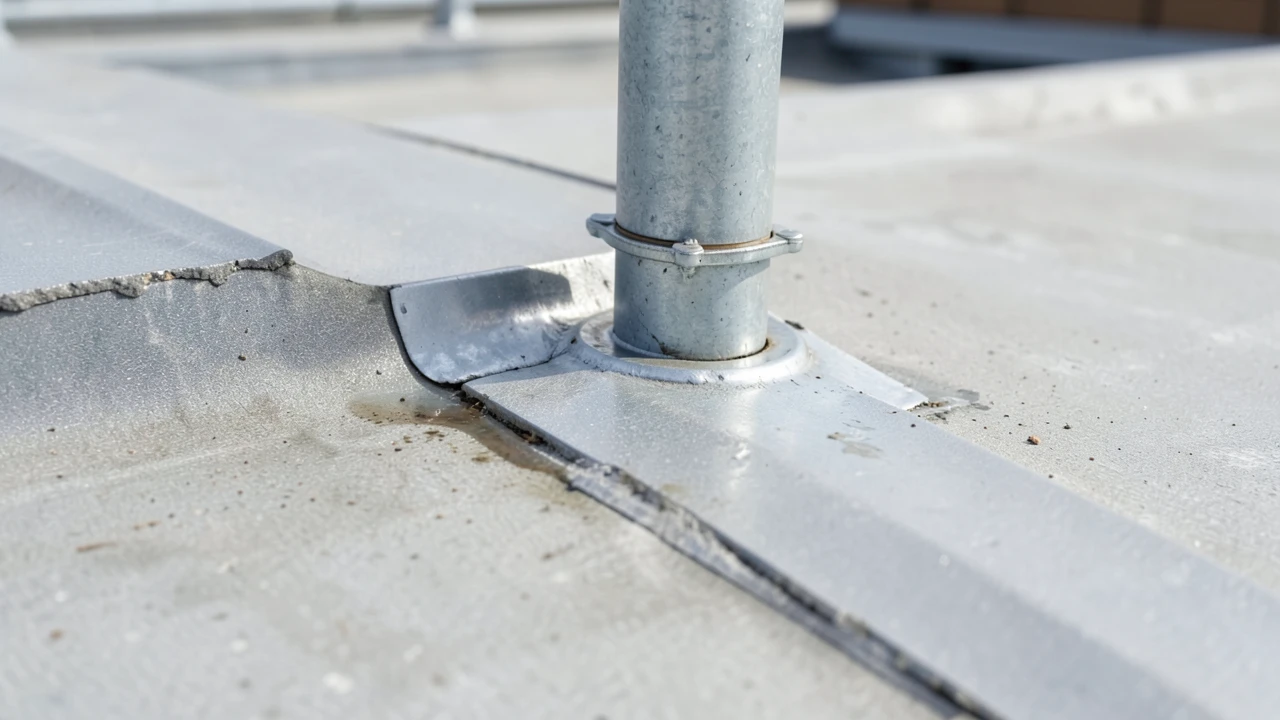
From Theory to Build: Material Science in Modern Roof Replacement
In my 18 years of working on roofs across South Oak Cliff-from handling hailstorm damage near Junius Heights to protecting businesses in Bishop Arts-I've seen the evolution of roofing materials firsthand. The difference between older, less durable flashing and modern components is profound, and it all comes down to material science.
Today’s advanced systems frequently utilize specialized stainless steel or coated copper alloys. These metals are chosen specifically because they resist the aggressive corrosion caused by unique elements in our DFW climate-things like mineral content in rainwater runoff or airborne chemicals. They are designed not just to last, but to flex while maintaining an absolute seal.
The process itself is a layered art form. It involves integrating multiple flashing components:
- The Primary Metal: The main metal piece (e.g., copper) providing the bulk of the barrier.
- The Secondary Sealant: High-grade, chemical-resistant membrane adhesive applied beneath and around the metal to provide a liquid redundancy seal.
- The Tertiary Barrier: Specialized self-adhered flashing membranes (SAFs) that are laid over the entire joint before the final material is installed, creating an extra layer of physical protection.
Crucially, advanced flashing techniques during commercial roof replacement must account for thermal expansion and contraction. Texas has some incredible temperature swings-hot days followed by cool nights can cause materials to expand and contract dramatically. The chosen metals and sealants must flex with the building without cracking their seams or losing adhesion, which guarantees the long-term reliability of your new investment. This level of technical precision is why these techniques are non-negotiable; they guarantee that the roof system will perform decades from now, not just next season.
Translating Commercial Expertise to Your South Oak Cliff Home
Now, I know what you might be thinking: “I don’t own a multi-story commercial building with HVAC units and dozens of vents. Why do I care about advanced flashing?”
The answer is that while your home may be residential, the principles are identical. Every single house in South Oak Cliff-whether it's an established property near Cedar Crest or a newer build-has structural penetrations: chimney stacks, venting for plumbing/electrical lines, and gutters where downspouts exit. These points are miniature commercial roof failure zones if not handled by expert flashing techniques.
When speaking with any roofing contractor about your home in the South Oak Cliff area, you must treat them like a technical consultant, not just a salesperson. Don't accept vague answers. You have every right to ask these specific questions:
- “Will the proposed repair include waterproofing around all roof penetrations, or are we simply sealing the visible leak?”
- “What type of flashing material will be used at the chimney stack, and how is it sealed into the membrane?”
- “Are you accounting for thermal movement when designing the flashing system?”
If a contractor struggles to answer these detailed questions with confidence, they may not have the depth of knowledge required. We are talking about preventative maintenance; we are talking about ensuring that what you build today remains protected by an expertly sealed envelope against every storm South Oak Cliff can throw at it.
Protecting Your Investment: Next Steps After a Storm or Leak Discovery
Finding a leak is stressful enough, but receiving conflicting advice from different contractors makes it worse. Before any major repair begins, the absolute first step must be a comprehensive, detailed inspection-one that goes far beyond simply looking for visible water trails. A true inspection involves tracing the path of the water to determine where the seal failed initially.
This is where experience matters most. I've spent my career navigating the specific structural challenges and storm threats faced by homeowners in this region. My focus has always been on holistic protection, understanding that a minor flashing failure today can escalate into devastating interior damage years down the line.
If you are dealing with persistent signs of water intrusion, or if your roof was impacted by recent severe weather, do not delay calling an expert. Whether the issue is a major commercial structure requiring advanced flashing techniques during commercial roof replacement, or simply a single-family home in Oak Lawn needing critical preventative attention, reliable, specialized help is right here.
We provide that peace of mind, ensuring your property remains protected from the ground up-or rather, from the top down. Call us today at +1 469-589-3827 for an honest assessment and a solid plan that prioritizes true structural integrity over quick fixes. Home.